Have you heart anything about Miasma theory ?
miasma /maɪˈæzmə/ (usually singular) means a heavy cloud of something unpleasant or unhealthy:
A miasma of smog settled over the city.
The origin of the word miasma is New Latin, from Greek, defilement, from miainein to pollute, the first known use was in 1665.

In notes taken during a voyage to South America on HMS Beagle in the 1830s, Charles Darwin described an illness that he believed was caused by "miasma" emanating from stagnant pools of water. For him, "miasma" had the same meaning that it did when it first appeared in English in the 1600s: an emanation of a vaporous disease-causing substance. But while Darwin was at sea, broader applications of "miasma" were starting to spread. Nowadays, we know germs are the source of infection, so we're more likely to use the newer, more figurative sense of "miasma," which refers to something destructive or demoralizing that surrounds or permeates.
miasma /maɪˈæzmə/ (usually singular) means a heavy cloud of something unpleasant or unhealthy:
A miasma of smog settled over the city.
The origin of the word miasma is New Latin, from Greek, defilement, from miainein to pollute, the first known use was in 1665.
This word (plural miasmas also miasmata \-mə-tə\) can be used for a vaporous exhalation formerly believed to cause disease.
In miasma theory, diseases were caused by the presence in the air of a miasma, a poisonous vapour in which were suspended particles of decaying matter that was characterised by its foul smell. The theory originated in the Middle Ages and endured for several centuries. That a killer disease like malaria is so named - from the Italian mala‘bad’ and aria ‘air’ - is evidence of its suspected miasmic origins.
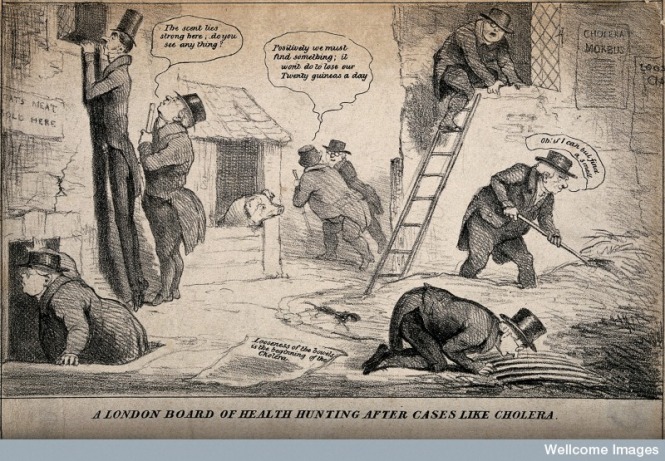
In notes taken during a voyage to South America on HMS Beagle in the 1830s, Charles Darwin described an illness that he believed was caused by "miasma" emanating from stagnant pools of water. For him, "miasma" had the same meaning that it did when it first appeared in English in the 1600s: an emanation of a vaporous disease-causing substance. But while Darwin was at sea, broader applications of "miasma" were starting to spread. Nowadays, we know germs are the source of infection, so we're more likely to use the newer, more figurative sense of "miasma," which refers to something destructive or demoralizing that surrounds or permeates.


